Inside the Champion’s Mind: The Psychology of Elite Esports Competitors
Beyond Fast Reflexes: The Cerebral Arena of Esports
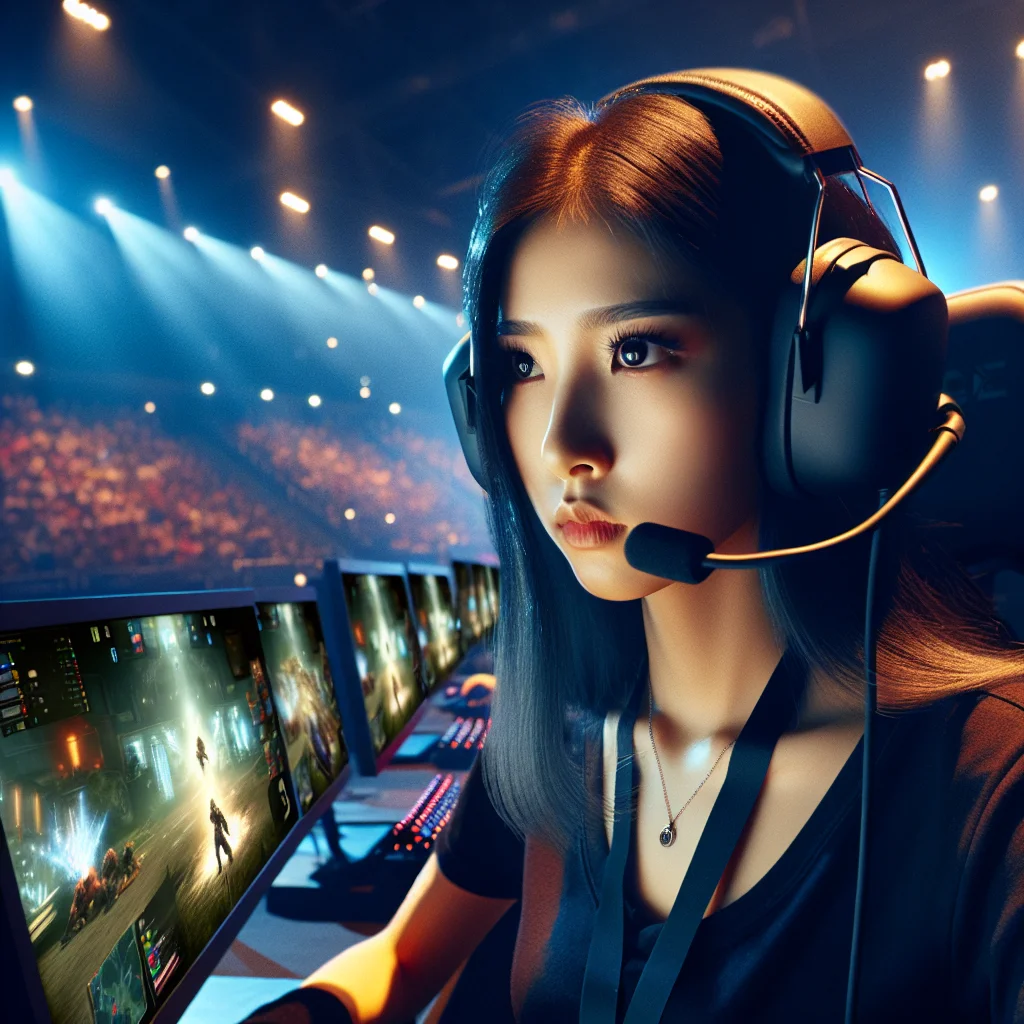
The common misconception paints the elite esports competitor as a teenager with lightning-fast reflexes, thriving on caffeine and endless practice. While reaction time is a commodity, the true foundation of a champion’s psychology is vastly more complex. The digital battlefield of games like League of Legends, Counter-Strike, or StarCraft is a relentless test of cognitive overload, emotional regulation, and strategic foresight. Players must process a flood of visual and auditory information, make split-second decisions with massive consequences, and coordinate with teammates under extreme scrutiny—all while managing their own internal state. This environment forges a unique psychological profile, one that combines the focus of a chess grandmaster, the resilience of a special forces operative, and the public poise of a traditional athlete. The mind, not just the mouse hand, is the primary tool for victory. Understanding this mental framework reveals why only a tiny fraction of gifted players can withstand the pressure to become true professionals, thriving in an ecosystem where a single mistake can be broadcast to millions and define a career.
Faker: The Unshakeable Foundation of League of Legends
Lee “Faker” Sang-hyeok, the legendary mid-laner for T1, is perhaps the most studied psychological profile in all of esports. His demeanor is famously calm, collected, and almost serene, even in the most chaotic team fights or devastating losses. This unflappability is not an absence of emotion but a supreme form of emotional control. Faker’s psychology is built on a bedrock of process-oriented thinking. He divorces his performance from the outcome of the game, focusing instead on executing his champion’s mechanics and rotational decisions to perfection every single time. This creates a mental feedback loop centered on self-improvement rather than external validation. His focus is so profound that it borders on a flow state, allowing him to filter out crowd noise, trash talk, and high stakes to see only the game’s fundamental elements. Furthermore, Faker exhibits immense cognitive flexibility. He can shift strategies on the fly, adapt to meta changes year after year, and absorb an ocean of game knowledge without succumbing to rigidity. His longevity at the pinnacle of the most popular esport in the world is a testament to a psychology engineered for sustainable excellence, where humility and a relentless work ethic protect against burnout and hubris.
S1mple: The Fiery Virtuoso of Counter-Strike
In stark contrast to Faker’s stoicism stands Oleksandr “s1mple” Kostyliev, the Ukrainian Counter-Strike: Global Offensive phenom. S1mple’s psychological profile is that of the passionate, emotionally expressive virtuoso. His playstyle is aggressive, creative, and often reliant on breathtaking individual skill—a style fueled by a visible, intense fire. Early in his career, this passion sometimes tipped over into tilt and frustration, a vulnerability opponents sought to exploit. The evolution of his psychology is a key part of his legacy. He learned to channel that raw emotion into a sustained competitive burn rather than letting it erupt destructively. His confidence borders on arrogance, but it is a confidence earned through undeniable skill and a willingness to shoulder the immense pressure of being his team’s primary star. This profile requires a different kind of resilience: the ability to perform under the expectation of delivering miraculous plays every round. S1mple’s mind thrives on this pressure, using it as a catalyst for peak performance. He demonstrates that there isn’t one “correct” esports psychology; emotional fuel, when properly managed and directed, can be as powerful as detached calm, creating a player whose will to win is as palpable as his technical mastery.
The Team Dynamic: Psychology in a Five-Person Unit
For players in team-based esports, individual psychology is only half the battle. The ability to function within a high-stress, interdependent unit introduces a completely separate layer of mental demands. This requires advanced social and communicative intelligence. Teammates must build a shared mental model of the game, communicating complex information under extreme time pressure without succumbing to miscommunication or emotional contagion. The psychological profile of an in-game leader (IGL), like Counter-Strike’s Finn “karrigan” Andersen, is particularly fascinating. The IGL must possess strategic brilliance while also acting as a team psychologist, managing morale, mediating conflicts, and making decisive calls that others must instantly follow, often after a devastating loss. This role demands immense emotional labor and a sacrifice of personal glory for systemic success. Furthermore, teams must develop collective resilience—the ability to lose a crucial round or match and mentally reset as a unified entity before the next one begins. The clash of strong individual personalities within a team, and the process of forging them into a cohesive whole, is one of the greatest psychological challenges in professional esports, where synergy often trumps the sum of individual talents.
Combating Burnout and the 24/7 Grind
A dark undercurrent in the psychology of esports professionals is the pervasive risk of burnout. The career path often begins in adolescence with a compulsive love for the game, which then gets industrialized into a grueling schedule of 10-14 hour practice days, constant travel, and unending public scrutiny. The line between passion and job becomes blurred, and the activity that was once an escape becomes a source of immense stress. Champions must actively develop psychological strategies to protect their mental health. This includes enforcing strict boundaries between work and rest, cultivating hobbies and identities completely separate from gaming, and seeking professional support for anxiety and performance pressure. The ability to “touch grass”—to maintain a connection to the offline world—is not a meme but a crucial survival skill. The most sustainable profiles are those who, like Faker, find joy in the process of improvement itself, or who learn to compartmentalize their competitive persona from their private self. Failure to manage this aspect leads to shortened careers, diminished performance, and well-documented mental health crises, highlighting that the battle for psychological well-being is as constant as the battle on the server.
The Future Mind: Neuroscience and Cognitive Training
The frontier of esports psychology is moving beyond observation into active optimization, leveraging neuroscience and structured cognitive training. Top organizations now employ sports psychologists who help players with visualization techniques, stress inoculation training, and focus drills. Biofeedback tools, such as heart rate variability monitors, are used to teach players to recognize and control physiological signs of tilt. The study of “attentional blink”—the mind’s momentary lapse after focusing on a stimulus—is relevant for noticing key cues in fast-paced games. Future champions may train their brains with neurofeedback and cognitive exercises designed to enhance working memory, pattern recognition, and decision-making speed under load. This represents the final stage in the professionalization of the esports mind: treating it not as a static trait but as a malleable, trainable organ that can be strengthened and refined like a muscle. The psychological profile of the next generation champion will likely be a hybrid—a natural talent systematically augmented by scientific mental training, capable of unprecedented levels of consistent, peak performance in the most demanding digital environments ever created.