The Mind Behind the Machine: Psychological Profiles of Poker’s Elite
The Poker Face Paradox: More Than Just a Blank Stare
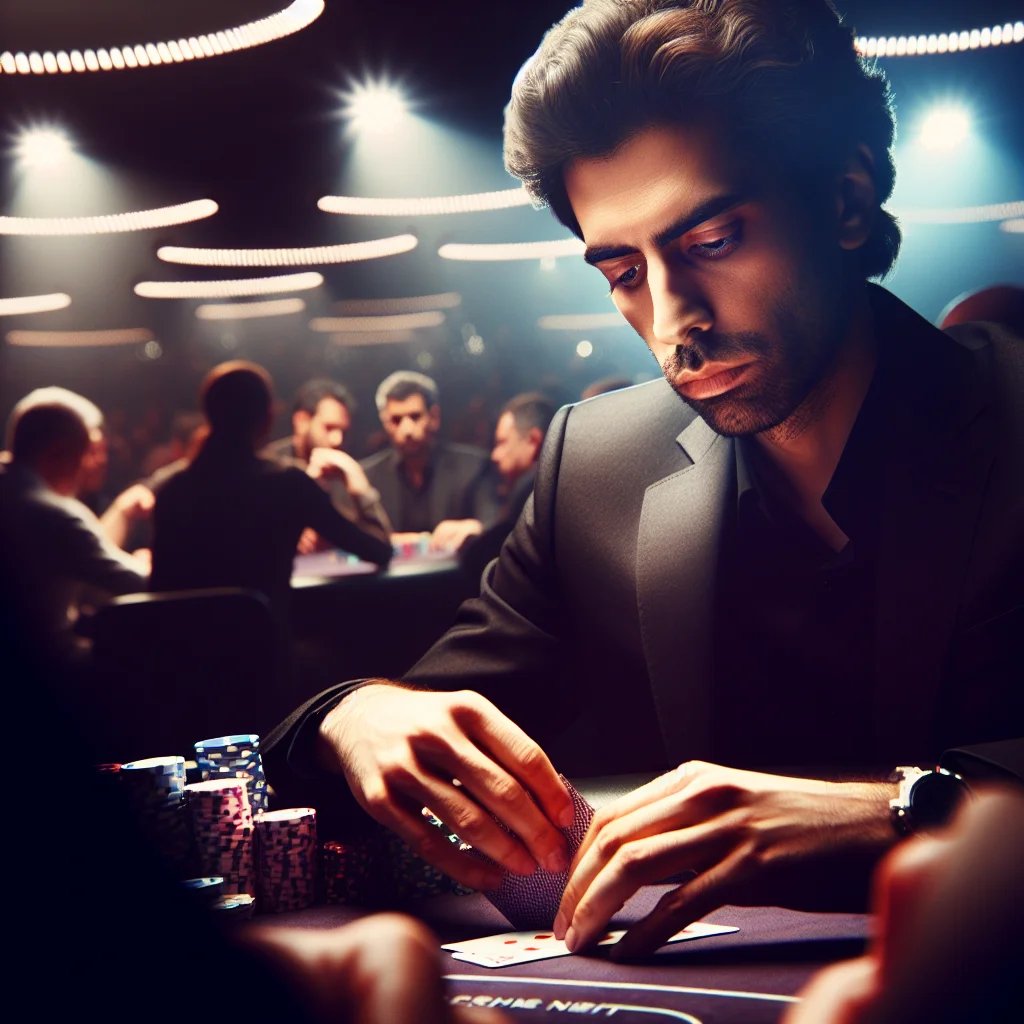
When the public imagines a professional poker player, the cliché of the impenetrable “poker face” immediately comes to mind. This stereotype suggests a individual devoid of emotion, a human robot designed to conceal all tells. However, the psychological reality for the elite is far more nuanced and active. The most successful players are not simply hiding their emotions; they are engaged in a complex, multi-layered psychological operation. They must manage their own internal states—suppressing frustration, modulating excitement, and maintaining a baseline of calm focus—while simultaneously launching a relentless offensive of observation and deduction against their opponents. This dual-process turns the table into a cerebral battlefield where emotional intelligence is the ultimate weapon. The face is not a wall, but a carefully curated instrument, sometimes used to project false tells, other times to project overwhelming confidence, and often to simply remain a neutral canvas that offers no information. Understanding this paradox is the first step in appreciating the profound mental architecture required to compete at the highest levels.
Daniel Negreanu: The Empathic Calculator
Daniel “Kid Poker” Negreanu stands as a prime example of how extroversion and empathy can be weaponized in a game of cold logic. Negreanu’s psychological profile is dominated by his exceptional social and emotional intelligence. He is a master of “people reading,” a skill he prioritizes over pure mathematical calculation. His style is conversational, engaging, and observant. He builds a dynamic psychological profile of each opponent in real-time, tracking betting patterns, speech rhythms, and physical mannerisms to assign them to player types he has cataloged over decades. His empathy allows him to sense weakness, uncertainty, or strength, not from grand gestures, but from microscopic deviations in behavior. However, to mistake this affable demeanor for softness would be a grave error. Underneath the friendly banter lies a fiercely competitive and resilient mind. Negreanu possesses an almost preternatural ability to handle variance and bad beats without tilting, a trait rooted in profound emotional regulation. His psychology is a blend: using warmth as a tool to gather information while maintaining an inner core of disciplined detachment when making critical, money-risk decisions.
Phil Ivey: The Stoic Predator
If Negreanu represents the empathic side of the spectrum, Phil Ivey embodies the archetype of the stoic predator. Ivey’s table presence is legendary for its quiet, relentless intensity. His psychological makeup is characterized by an unparalleled level of focus, patience, and emotional containment. He exemplifies the concept of “process over outcome.” Ivey is not playing individual hands; he is engaging in a war of attrition where his superior skill edge will manifest over time, regardless of short-term luck. This requires a mindset immune to the emotional rollercoaster of winning and losing pots. His stoicism is not an act but a deeply ingrained trait that allows him to make optimally rational decisions under immense pressure. He views the game with a detached, analytical clarity, seeing opponents not as people but as sources of predictable patterns to be exploited. This psychological distance is his greatest asset. Furthermore, Ivey demonstrates extreme mental endurance, able to maintain peak concentration for sessions lasting over 24 hours. His profile is that of a master craftsman, where ego is subsumed by the relentless pursuit of technical perfection and exploitative advantage, making him one of the most intimidating psychological presences to ever sit at a felt table.
The Variance Mind: Mental Fortitude in a World of Chaos
A defining psychological challenge for every professional player, regardless of style, is grappling with variance—the short-term luck that can see the best decisions lose and the worst decisions win. The mental fortitude required to withstand this chaos is what separates durable careers from flash-in-the-pan successes. Elite players cultivate a mindset known as “being results-independent.” This involves a rigorous cognitive reframing where self-worth and decision-quality are decoupled from immediate financial outcomes. They engage in constant self-talk and mental review, analyzing whether they made the correct play based on the information available, not on whether they won the pot. This builds a resilient identity as a “correct decision-maker,” which acts as a psychological buffer against the inevitable downswings. Many employ mindfulness and meditation techniques to manage tilt (emotional frustration). They understand that psychology is not just for reading others but, more importantly, for managing the internal storm that variance provokes. This compartmentalization—accepting the randomness of the short term while trusting the mathematics of the long term—requires a sophisticated and often deliberately trained psychological framework to avoid the descent into doubt, superstition, and self-sabotage.
Fedor Holz: The Modern Synthesis of Logic and Spirituality
The new generation of poker elites, exemplified by Fedor Holz, introduces a fascinating evolution in the psychological profile. Holz achieved meteoric success through a hyper-analytical, data-driven approach, leveraging solvers and game theory optimal (GTO) strategies. This represents a psychology rooted in supreme confidence in objective mathematical models. However, what makes Holz’s profile particularly interesting is his subsequent public exploration of mindfulness, purpose, and spirituality beyond the game. He has spoken extensively about the emptiness of chasing money and the importance of mental health and holistic well-being. This suggests a modern psychological synthesis: using cold, hard logic as the tool for execution at the table, while building a separate, richer psychological foundation outside of it to provide meaning and stability. This duality may be a response to the burnout and existential questions that plague many high achievers. Holz’s psychology points towards a future where peak performance is not just about processing power and emotional control at the table, but about integrating the game into a balanced and purposeful life, thereby preventing the psychological corrosion that can come from a singular focus on profit and competition.
Cultivating the Champion’s Mindset
While the profiles of Negreanu, Ivey, and Holz differ markedly, they converge on several non-negotiable psychological pillars. First is an obsessive capacity for self-assessment and learning. All champions possess a growth mindset, viewing losses as feedback and constantly seeking to refine their mental and technical game. Second is radical accountability. They blame bad luck sparingly and focus instead on their own decisions, a trait that empowers improvement. Third is ego management. The ability to detach personal pride from a hand is crucial; the need to be “right” or to prove superiority is a catastrophic leak. Finally, there is the mastery of attention. The poker table is a sea of distractions—chatty opponents, flashing lights, personal problems. The elite can funnel their attention like a laser beam onto the relevant informational signals, filtering out all noise. These traits are not merely innate; they are often painstakingly developed through experience, study, and sometimes professional coaching. The portrait of the professional poker player that emerges is not of a gambler, but of a high-performance psychological athlete, for whom the cards are merely the medium through which a profound mental contest is waged.